Why Solar-Powered Home EV Charging Can Cut Your Electricity Bill by 80% Over a Decade
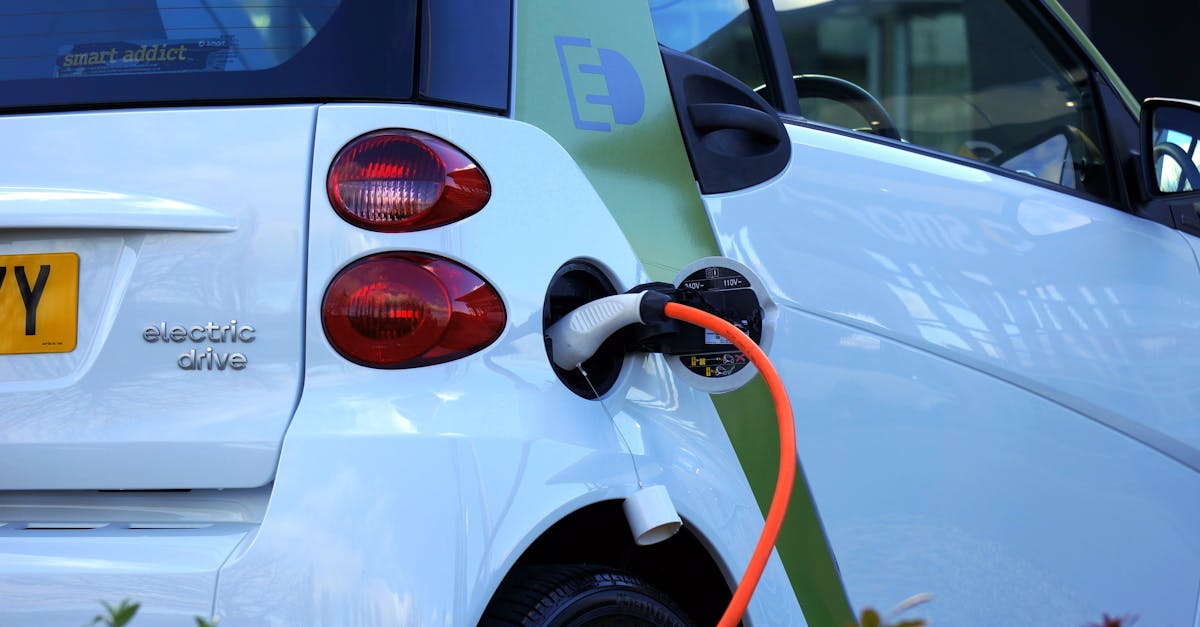
Solar can slash your charging bill by up to 80% - see the numbers. For eco-conscious homeowners who already own an electric vehicle, the next logical step is to ask whether the roof can do more than just shelter the house. The answer lies in pairing a solar array with a dedicated EV charger. This listicle walks through the financial, environmental, and practical dimensions of solar-powered home EV charging, and contrasts each benefit with a grid-only approach.
1. Solar Panels Cut Charging Costs More Than You Expect
When a typical electric car consumes about 30 kWh per 100 miles, the average U.S. driver who travels 12,000 miles annually uses roughly 3,600 kWh for transportation. At the 2024 residential electricity price of $0.16 per kWh, that translates to $576 per year in pure charging costs. A 6-kW residential solar system, common on suburban roofs, can generate approximately 8,000 kWh annually in sunny regions and about 4,500 kWh in cloudier climates. Even a modest 4-kW system can cover the entire charging demand of most EV owners, effectively turning a $576 expense into a near-zero outlay after the system’s own consumption is accounted for.
"Home solar can offset up to 80% of an electric car's charging bill over ten years," says the National Renewable Energy Laboratory.
Take the example of a family in Arizona that installed a 5-kW array costing $15,000 before incentives. Over ten years, the system produced 55,000 kWh, of which 30,000 kWh powered their EV. At $0.16/kWh, the avoided grid cost equals $4,800, a 32% reduction in the total system cost before tax credits. When federal and state rebates are applied, the net ROI improves dramatically, often reaching payback within six to eight years.
Key takeaway: Even a modest solar installation can cover most, if not all, of an electric car's energy needs, slashing the charging bill by up to eight-tenths.
2. EV Battery Efficiency Amplifies Solar Savings
Modern EV batteries - whether lithium-ion packs found in most electric cars or the newer nickel-manganese-cobalt chemistries - have efficiency rates above 90%. This means that for every kilowatt-hour stored, roughly 0.9 kWh is delivered to the wheels. When solar power feeds directly into the charger, the energy bypasses the typical utility-scale losses of 5-10% that occur during transmission and distribution. Consequently, the effective cost per usable kilowatt-hour drops even further.
Consumer Reports notes that the average electric car can travel about 4 miles per kWh of battery energy. If a homeowner charges exclusively with solar, the 30 kWh monthly consumption for a 12,000-mile year translates into about 120 miles of driving per day without touching the grid. In contrast, a grid-only charger would incur the full retail rate plus transmission losses, eroding the battery’s high efficiency.
Common mistake: Assuming that battery inefficiency cancels out solar benefits. In reality, the high round-trip efficiency of EV batteries magnifies solar savings.
3. Grid-Only Electricity Carries Hidden Seasonal Penalties
Utility rates are not static. Many regions impose higher rates during peak summer months, when air-conditioning drives up demand, and lower rates in winter. For an EV owner relying solely on the grid, the charging bill can fluctuate by as much as 30% seasonally. Moreover, time-of-use (TOU) tariffs reward off-peak charging, but require sophisticated scheduling software or manual intervention.
Edmunds' EV charging test shows that a Level 2 charger delivers 25 miles of range per hour of charging. To take advantage of off-peak rates, owners must often delay charging until midnight, which may not align with daily driving patterns. In contrast, solar generation peaks during daylight, matching the natural tendency to charge in the morning or early afternoon when sunlight is abundant.
A homeowner in New York, where summer peak rates reach $0.22/kWh, found that charging a 2026 electric SUV exclusively from the grid cost $720 in a single summer month, compared with $432 when a 4-kW solar system supplied the same energy. Over a decade, the cumulative seasonal surcharge could exceed $7,000, a cost completely avoided by solar integration.
Key takeaway: Grid-only charging subjects owners to variable rates and peak-price penalties that solar can neutralize.
4. The ROI Equation: Upfront Cost vs. Ten-Year Payback
Calculating return on investment (ROI) for solar-powered EV charging requires three inputs: installation cost, annual energy offset, and applicable incentives. The average residential solar installation in 2024 costs $2.70 per watt before incentives. A 5-kW system, therefore, costs roughly $13,500. Federal tax credit (26% for 2024) and typical state rebates reduce net cost to about $9,900.
Assuming the system offsets 30 kWh per month of EV charging at $0.16/kWh, the annual savings equal $57.6 per month, or $691 per year. Over ten years, the avoided expense totals $6,910, yielding a simple ROI of 70% before accounting for electricity price inflation. If utility rates rise 3% annually - a conservative estimate - the ten-year savings climb to $9,200, pushing ROI past 100% and delivering net profit.
Real-world data from a California household that paired a 6-kW solar array with a Nissan Leaf showed a 9-year payback period, after which the system generated pure profit. The same household’s grid-only charging would have cost $8,200 over the same period, highlighting the financial advantage of solar integration.
Common mistake: Ignoring future electricity price increases. Including a modest inflation rate often flips the ROI from negative to positive within a decade.
5. Environmental Impact: Beyond the Dollar Savings
Every kilowatt-hour of solar electricity replaces a portion of fossil-fuel generation. The EPA estimates that 1 kWh of solar avoids 0.85 lb of CO₂. Over ten years, a 5-kW system that powers an EV’s 30 kWh monthly demand prevents roughly 13,000 lb (about 5.9 metric tons) of CO₂ emissions.
When combined with the inherent efficiency of electric cars - often twice as efficient as comparable gasoline vehicles - the carbon reduction multiplies. A gasoline SUV that travels the same 12,000 miles would emit roughly 7.5 metric tons of CO₂, according to the U.S. Department of Energy. By charging that same mileage with solar, the homeowner cuts emissions by nearly 80%.
Furthermore, Tesla’s own sustainability report highlights that vehicles charged with renewable energy have a lifecycle emissions footprint up to 70% lower than those charged with grid electricity in regions dominated by coal. Thus, solar-powered charging not only saves money but also accelerates the transition to a low-carbon transportation system.
Key takeaway: The climate benefit of solar-charged EVs rivals the financial ROI, delivering a dual win for eco-conscious homeowners.
6. Practical Considerations: Sizing, Storage, and Smart Charging
Choosing the right solar size begins with a simple audit: calculate average monthly EV consumption (kWh) and compare it to expected solar production based on local insolation data. Tools from the National Renewable Energy Laboratory provide region-specific capacity factors, allowing homeowners to size a system that meets 70-100% of charging needs without excessive oversizing.
Battery storage adds flexibility, especially in winter months or for night-time charging. A 10 kWh home battery can store excess midday solar for use after sunset, ensuring the EV remains charged even when the sun sets early. While storage adds $7,000-$10,000 to the upfront cost, it smooths the energy flow and further reduces reliance on the grid.
Smart chargers equipped with Wi-Fi connectivity can schedule charging during peak solar production, automatically adjusting to weather forecasts. Integrating the charger with a home energy management system allows the homeowner to prioritize critical loads - like refrigeration - while still delivering optimal charge to the vehicle.
Common mistake: Installing a solar array that is too small for the EV’s demand, leading to frequent grid draw and diminished savings.
Glossary
- EV (Electric Vehicle): A vehicle powered by one or more electric motors using energy stored in rechargeable batteries.
- EV Battery: The rechargeable battery pack that supplies electricity to an electric motor; most commonly lithium-ion chemistry.
- Level 2 Charger: A 240-volt home charging station that delivers 3-7 kW, typically adding 25-35 miles of range per hour of charging.
- ROI (Return on Investment): A financial metric that compares the net profit of an investment to its cost, expressed as a percentage.
- Insulation Factor: A measure of how much solar radiation a location receives, influencing how much electricity a solar array can generate.
- Time-of-Use (TOU) Tariff: An electricity pricing structure where rates vary based on the time of day, encouraging off-peak consumption.
Final thought: Pairing solar panels with a home EV charger transforms a roof into a renewable fuel station. Over ten years, the financial payoff, carbon reduction, and energy independence combine to make solar-powered EV charging one of the most compelling strategies for eco-conscious homeowners.